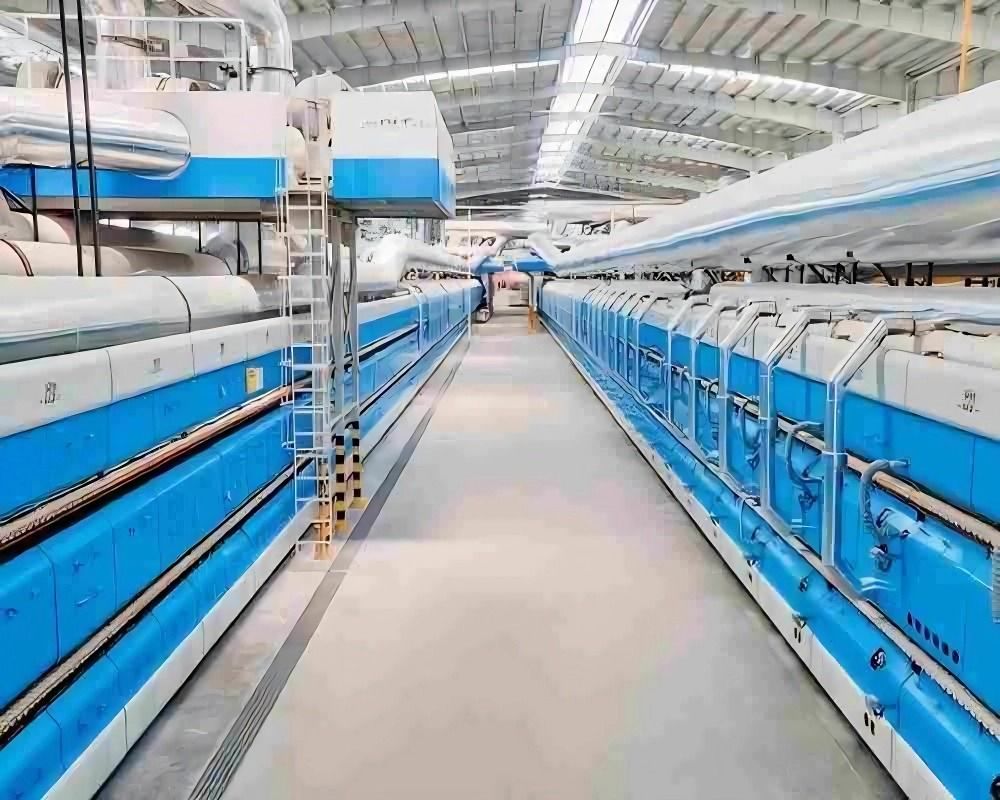
Highlight:
Energy-Efficient Roller Hearth Kiln
, Automatic Double-Deck Tile Kiln
, Mass Tile Manufacturing Kiln
Energy-Efficient Automatic Double-Deck Roller Hearth Kiln for Mass Tile Manufacturing
Energy-Efficient Automatic Double-Deck Roller Hearth Kiln for Mass Tile Manufacturing
Brief Description
The Energy-Efficient Automatic Double-Deck Roller Hearth Kiln is designed for continuous and high-volume firing of ceramic tiles and other flat ceramic products. Its double-deck structure utilizes vertical production space efficiently, allowing two firing levels to operate within a compact footprint. The roller hearth conveying system provides smooth, continuous movement of products through preheating, firing, and cooling zones. Automatic temperature control and coordinated conveying help maintain stable firing conditions and consistent product quality. The kiln can be configured according to tile dimensions, body composition, firing temperature, production capacity, and available fuel. Its modular design also facilitates installation, operation, maintenance, and future capacity adjustments. Depending on the production requirements, the system can integrate burners, combustion controls, exhaust equipment, cooling systems, sensors, PLC controls, and HMI interfaces. It is particularly suitable for manufacturers seeking a compact, automated kiln solution for mass tile production while maintaining reliable thermal performance and process control.
Key Features
1. Double-Deck Compact Structure
The double-deck configuration provides two production levels within the same overall footprint, helping manufacturers make better use of available factory space. It is suitable for projects where production capacity needs to increase without proportionally expanding the kiln installation area. The two decks can be engineered according to product dimensions, firing curves, conveying requirements, and factory layout. This structure is particularly useful for medium- and large-scale tile production lines where efficient space utilization is an important consideration.
2. Continuous Roller Hearth Conveying
The roller hearth system continuously transports tiles through the kiln without requiring conventional kiln cars. Precision rollers provide stable product movement through the preheating, firing, and cooling zones. The conveying speed can be coordinated with the required firing cycle and production capacity. This continuous operation supports automated material handling and reduces manual intervention. Roller specifications, spacing, conveying speed, and drive configuration can be selected according to tile size, weight, thickness, and production requirements.
3. Automatic Temperature Control
The kiln is equipped with a multi-zone temperature control system to manage the thermal profile throughout the firing process. Temperature sensors, controllers, burners, and PLC-based automation work together to maintain the required firing curve. Operators can monitor and adjust key process parameters through an HMI interface. Stable temperature distribution is important for controlling tile deformation, color variation, and firing quality. The control system can be customized according to the raw material formulation and firing temperature required for different ceramic products.
4. Energy-Efficient Thermal Design
The kiln can incorporate optimized insulation, controlled combustion, heat recovery, and zoned temperature management to reduce unnecessary heat loss. Proper insulation limits heat transfer through the kiln walls and roof, while combustion control helps match fuel input with actual thermal demand. Waste heat from selected zones may also be utilized according to the process design. The final energy performance depends on product specifications, firing temperature, fuel type, kiln dimensions, production capacity, and operating conditions, allowing the thermal system to be engineered for each project.

Applications
1. Ceramic Wall and Floor Tile Production
The double-deck roller hearth kiln is suitable for continuous firing of ceramic wall tiles, floor tiles, and other flat ceramic products. Its continuous conveying system supports automated production lines with stable firing cycles. The kiln can be configured according to tile dimensions, thickness, body composition, glaze requirements, and firing temperature. Multi-zone temperature control helps establish a suitable heating and cooling curve for maintaining product quality during mass production.
2. Porcelain and High-Temperature Tile Manufacturing
For porcelain tiles and other ceramic products requiring controlled high-temperature firing, the kiln can be designed with appropriate burners, refractory materials, insulation, and temperature-control equipment. The firing curve can be divided into multiple zones to provide gradual heating, high-temperature firing, and controlled cooling. This configuration helps manufacturers manage thermal conditions according to the characteristics of the ceramic body and glaze system while supporting continuous industrial production.
3. Glazed Tile Production Lines
The kiln can be integrated into automated glazed tile production lines for continuous firing after forming, drying, glazing, and surface preparation. Precise conveying speed and temperature control help maintain consistent firing conditions across the production width. The complete line can incorporate automatic loading, kiln conveying, cooling, unloading, inspection, and packaging systems. The kiln configuration can be adapted to different tile formats and production capacities.
4. Large-Scale Tile Manufacturing Plants
For high-volume tile factories, the double-deck configuration provides an option for increasing production capacity while making efficient use of factory floor space. It can be integrated with automated forming, drying, glazing, sorting, and packaging equipment to create a continuous production line. The final kiln dimensions, number of heating zones, roller arrangement, fuel system, and automation level should be determined based on the required daily output and product specifications.
FAQs
Q1: What products can be fired in a double-deck roller hearth kiln?
The kiln is mainly designed for ceramic tiles, including wall tiles, floor tiles, porcelain tiles, glazed tiles, and similar flat ceramic products. The actual kiln design should be selected according to the product dimensions, thickness, raw material formulation, glaze, firing temperature, and required production capacity.
Q2: What are the advantages of a double-deck roller hearth kiln?
The main advantages are its compact vertical configuration, continuous conveying, high automation, and flexible temperature control. Compared with a conventional single-level layout, the double-deck structure can help utilize factory space more efficiently while supporting continuous tile production.
Q3: Can the kiln use different fuels?
Yes. The combustion system can be designed according to the customer's available energy source, such as natural gas or LPG. Burner capacity, combustion-air supply, control components, and kiln thermal design should be matched to the selected fuel and required firing temperature.
Q4: What information is needed to design a roller hearth kiln?
Key information includes tile dimensions and thickness, raw material composition, product weight, required firing temperature, firing cycle, daily production capacity, fuel type, factory layout, and automation requirements. These parameters allow the kiln length, width, roller configuration, heating zones, cooling zones, and control system to be properly engineered.


 Your message must be between 20-3,000 characters!