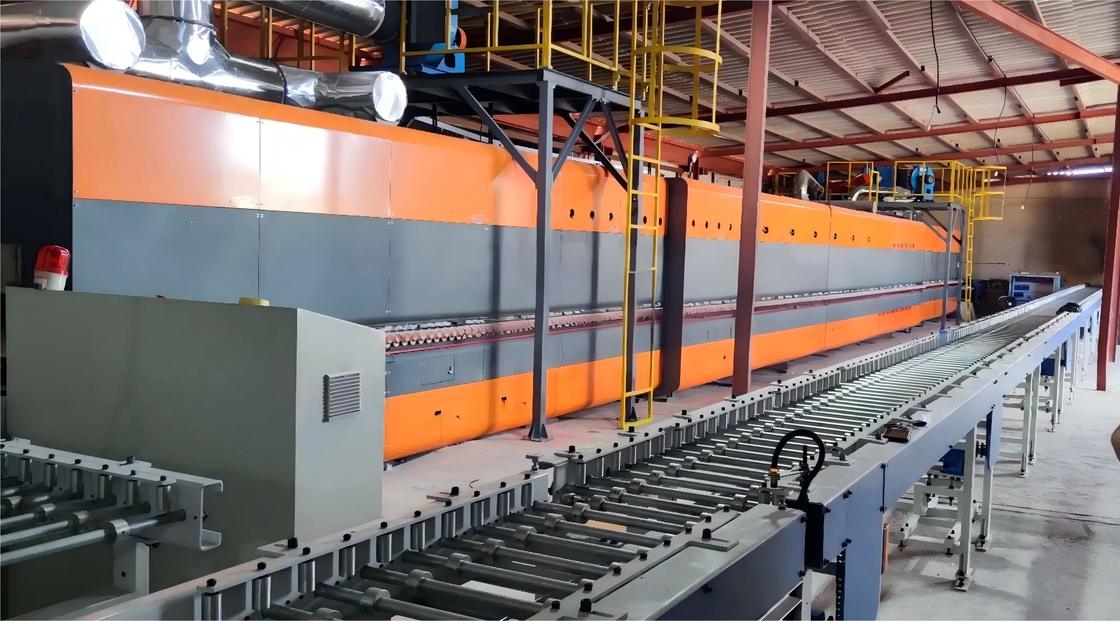
Highlight:
atmosphere-controlled roller hearth kiln
, technical ceramics sintering kiln
, high-throughput roller kiln
High-Throughput Atmosphere-Controlled Roller Hearth Kiln for Technical Ceramics Sintering
High-Throughput Atmosphere-Controlled Roller Hearth Kiln for Technical Ceramics Sintering
Brief Description
The High-Throughput Atmosphere-Controlled Roller Hearth Kiln is an industrial continuous firing system designed for high-volume sintering of technical ceramics and advanced ceramic components. It combines roller conveying technology with precise temperature and atmosphere control to provide stable thermal processing across different production stages. The kiln can be configured for various ceramic materials, including alumina, zirconia, silicon carbide, and other engineered ceramic compositions, depending on the required sintering temperature and atmosphere. Its continuous operation supports automated loading and unloading, making it suitable for production lines requiring consistent throughput and repeatable firing conditions. Independent temperature zones allow engineers to establish controlled heating, soaking, and cooling profiles. Atmosphere management can also be integrated when products require specific gas conditions during sintering. The kiln structure, roller system, insulation, burners or electric heating elements, and control system can be customized according to product dimensions, firing temperature, production capacity, and process requirements.
Key Features
1. High-Throughput Continuous Operation
The roller hearth configuration enables ceramic products to move continuously through the kiln without requiring conventional kiln cars. This design is suitable for production lines with high and stable output requirements. Automated conveying can be integrated with loading, unloading, inspection, and subsequent processing equipment, helping reduce manual handling and improve overall production efficiency.
2. Precise Multi-Zone Temperature Control
The kiln is divided into multiple independently controlled temperature zones, allowing the heating, soaking, and cooling stages to follow the required sintering curve. Temperature sensors and an automatic control system continuously monitor operating conditions. This configuration helps maintain a stable thermal profile and supports consistent sintering quality for technical ceramic products with demanding process requirements.
3. Controlled Kiln Atmosphere
For ceramic materials that are sensitive to oxidation, reduction conditions, or specific gas compositions, the kiln can be equipped with an atmosphere-control system. Gas supply, exhaust, pressure, and other process parameters can be adjusted according to the material and sintering technology. The controlled atmosphere helps create repeatable processing conditions and can be adapted to different ceramic formulations.
4. Flexible Industrial Configuration
The roller hearth kiln can be customized according to product size, weight, firing temperature, production capacity, and factory layout. Heating systems may be configured using electric heating elements or other suitable thermal technologies. Roller materials, insulation structures, control systems, and kiln dimensions can also be selected according to the technical requirements of the application.

Applications
1. Alumina Ceramic Sintering
The kiln can be used for continuous sintering of alumina ceramic components used in electrical insulation, wear-resistant parts, industrial components, and other applications. Precise temperature zoning provides controlled heating and cooling conditions, while continuous roller conveying supports automated production. The final kiln configuration should be determined according to the alumina composition, component geometry, required sintering temperature, and production capacity.
2. Zirconia Ceramic Components
Zirconia ceramics require carefully controlled thermal processing to achieve the required density and material properties. A roller hearth kiln can provide repeatable temperature profiles for continuous production of zirconia components. It can be integrated with automated material handling systems and configured according to component dimensions, firing cycle, atmosphere requirements, and target production volume.
3. Electronic and Electrical Ceramics
The kiln is suitable for manufacturing various technical ceramic components used in electronic and electrical applications. Products may include insulating components, ceramic substrates, and other precision parts, depending on the material system. Multi-zone temperature control and continuous conveying allow the firing process to be matched to the required thermal profile while supporting stable production conditions.
4. Advanced Ceramic Industrial Components
Technical ceramics are widely used for wear resistance, thermal stability, electrical insulation, and corrosion resistance. The roller hearth kiln can provide continuous sintering for different advanced ceramic components when their dimensions and thermal requirements are compatible with roller conveying. Customization of the heating system, atmosphere, roller structure, and control parameters allows the equipment to be adapted to specific industrial production lines.
FAQs
1. What materials can be sintered in a roller hearth kiln?
A roller hearth kiln can be designed for various technical ceramic materials, including alumina, zirconia, silicon carbide, and other engineered ceramics. The suitable kiln configuration depends on the material composition, sintering temperature, atmosphere, product dimensions, and required firing curve.
2. Can the kiln operate under a controlled atmosphere?
Yes. The kiln can be equipped with an atmosphere-control system for applications requiring specific gas conditions. The gas supply and exhaust systems can be configured according to the material and process requirements, including applications where oxidation or reduction conditions need to be controlled.
3. What information is required to design a roller hearth kiln?
Key information normally includes the ceramic material, product dimensions and weight, hourly or daily production capacity, required sintering temperature, firing cycle, atmosphere requirements, loading arrangement, and available factory space. Product samples or detailed technical specifications are also useful for determining the appropriate kiln configuration.
4. Is a roller hearth kiln suitable for automated ceramic production?
Yes. Its continuous conveying structure makes it suitable for integration with automated loading, unloading, transfer, inspection, and subsequent processing systems. The level of automation can be designed according to production capacity, product characteristics, and the customer's overall production-line requirements.


 Your message must be between 20-3,000 characters!