Highlight:
dimensional-accurate ceramic facing bricks
, weatherproof tunnel kiln bricks
, fast-fired ceramic bricks
Dimensional-Accurate & Weatherproof Ceramic Facing Bricks Processed via Tunnel Kiln Fast-Firing
Dimensional-Accurate & Weatherproof Ceramic Facing Bricks Processed via Tunnel Kiln Fast-Firing
Brief Description
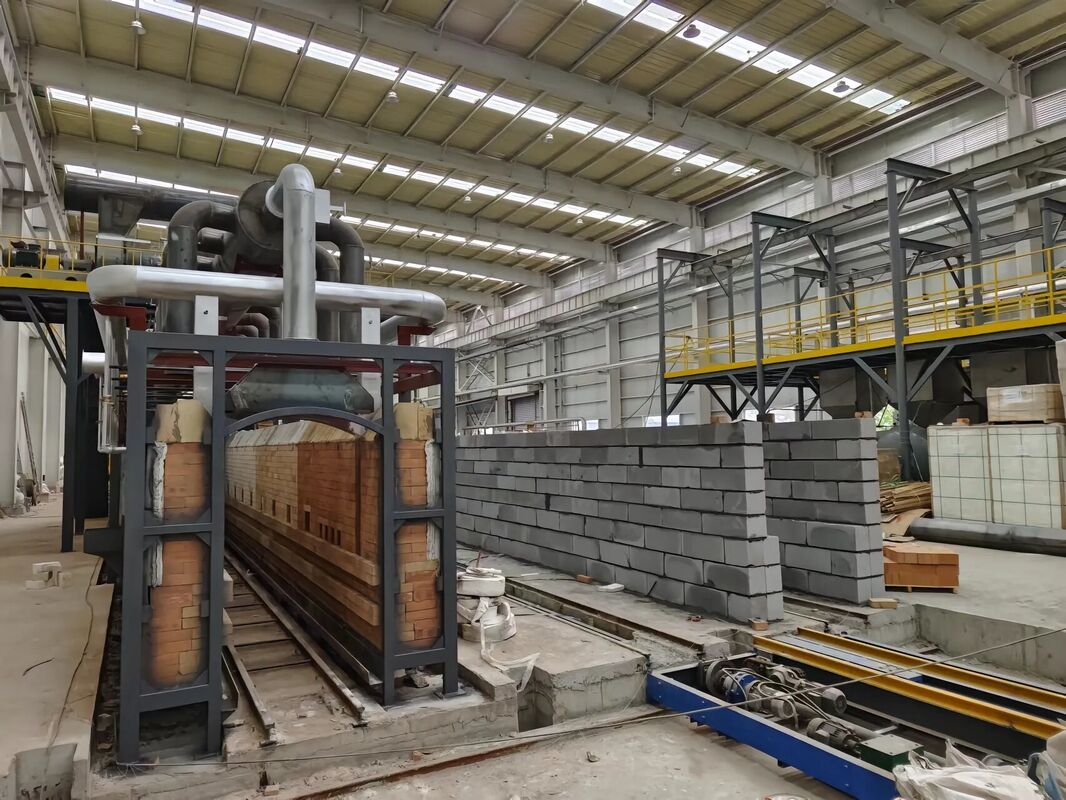
Ceramic facing bricks produced through tunnel kiln fast-firing technology are widely used for modern architectural facades because of their excellent dimensional accuracy, color consistency, and long-term durability. A continuous tunnel kiln ensures stable temperature control throughout the firing cycle, resulting in uniform sintering, reduced deformation, and consistent product quality. Compared with traditional intermittent firing methods, tunnel kiln technology improves production efficiency, lowers energy consumption, and supports large-scale manufacturing. The fired facing bricks offer excellent weather resistance, low water absorption, frost resistance, and high compressive strength, making them suitable for both residential and commercial buildings. With flexible raw material options and automated production processes, tunnel kiln systems can manufacture ceramic facing bricks in various colors, textures, and sizes to meet different architectural requirements while maintaining reliable quality and cost-effective production.
Key Features
1. Excellent Dimensional Accuracy
A continuous tunnel kiln maintains precise temperature distribution and firing curves, minimizing shrinkage variation and warping during sintering. The result is ceramic facing bricks with highly consistent dimensions, smooth edges, and accurate thickness, making installation faster and reducing mortar consumption. Dimensional consistency also improves wall alignment and overall construction quality, especially for projects requiring tight tolerances and modern architectural finishes.
2. Outstanding Weather Resistance
Tunnel kiln fast-firing produces a dense ceramic structure with low water absorption and excellent resistance to rain, UV exposure, freeze-thaw cycles, and temperature fluctuations. These properties help prevent cracking, discoloration, and surface deterioration over many years of outdoor service. The bricks retain their appearance with minimal maintenance, making them suitable for challenging climates and long-term exterior applications.
3. High Production Efficiency
The continuous operation of a tunnel kiln enables uninterrupted firing, automated material handling, and stable production scheduling. Compared with batch firing systems, manufacturers benefit from shorter production cycles, higher daily output, reduced labor requirements, and improved energy utilization. These advantages contribute to lower manufacturing costs while maintaining consistent product quality across every production batch.
4. Uniform Color and Reliable Quality
Accurate combustion control and stable firing temperatures ensure uniform color development throughout each brick. Consistent heat distribution minimizes color differences and internal defects, allowing manufacturers to achieve reliable appearance and mechanical performance. This consistency is particularly important for architectural projects where visual uniformity and product reliability are essential for large facade installations.
Applications
Residential Building Facades
Ceramic facing bricks are widely used for villas, apartments, and residential communities. Their attractive appearance, weather resistance, and low maintenance requirements provide long-lasting exterior walls that maintain their color and structural integrity over decades while improving the architectural value of residential developments.
Commercial and Office Buildings
Shopping centers, office complexes, hotels, and public buildings frequently use ceramic facing bricks because they combine aesthetic appeal with durability. The bricks withstand heavy environmental exposure while offering architects a wide range of colors, finishes, and laying patterns to create distinctive building facades.
Educational and Public Infrastructure
Schools, universities, hospitals, museums, and government buildings require construction materials with long service life and minimal maintenance. Ceramic facing bricks manufactured using tunnel kiln technology provide reliable performance, fire resistance, and attractive finishes that remain stable even under demanding environmental conditions.
Urban Landscape and Municipal Projects
Ceramic facing bricks are suitable for landscape walls, public squares, subway entrances, parks, pedestrian streets, and municipal architecture. Their resistance to weathering, pollution, and abrasion makes them ideal for outdoor environments where appearance and durability are equally important.
FAQs
Q1. Why are tunnel kilns preferred for producing ceramic facing bricks?
A: Tunnel kilns provide continuous firing with precise temperature control, resulting in consistent brick dimensions, uniform color, higher production efficiency, and lower energy consumption compared with traditional batch kilns.
Q2. What fuel types can a tunnel kiln use?
A: Depending on project requirements and local energy availability, tunnel kilns can operate with natural gas, LPG, coal gas, producer gas, biomass gas, or other suitable industrial fuels. The fuel selection influences operating costs, emissions, and combustion efficiency.
Q3. Can tunnel kilns manufacture different sizes and colors of ceramic facing bricks?
A: Yes. Tunnel kiln production lines can produce various brick dimensions, surface textures, and color finishes by adjusting raw material formulations, kiln firing parameters, and production processes to meet different architectural requirements.
Q4. What are the main advantages of fast-firing tunnel kiln technology?
A: Fast-firing technology increases production capacity, shortens firing cycles, improves energy efficiency, enhances product consistency, reduces manufacturing costs, and supports continuous large-scale production while maintaining high-quality ceramic facing bricks.


 Your message must be between 20-3,000 characters!