Highlight:
sintered red bricks low water absorption
, high-strength sintered bricks tunnel kiln
, tunnel kiln fired red bricks
High-Strength & Low-Water-Absorption Sintered Red Bricks Fired in Tunnel Kiln
High-Strength & Low-Water-Absorption Sintered Red Bricks Fired in Tunnel Kiln
Brief Description
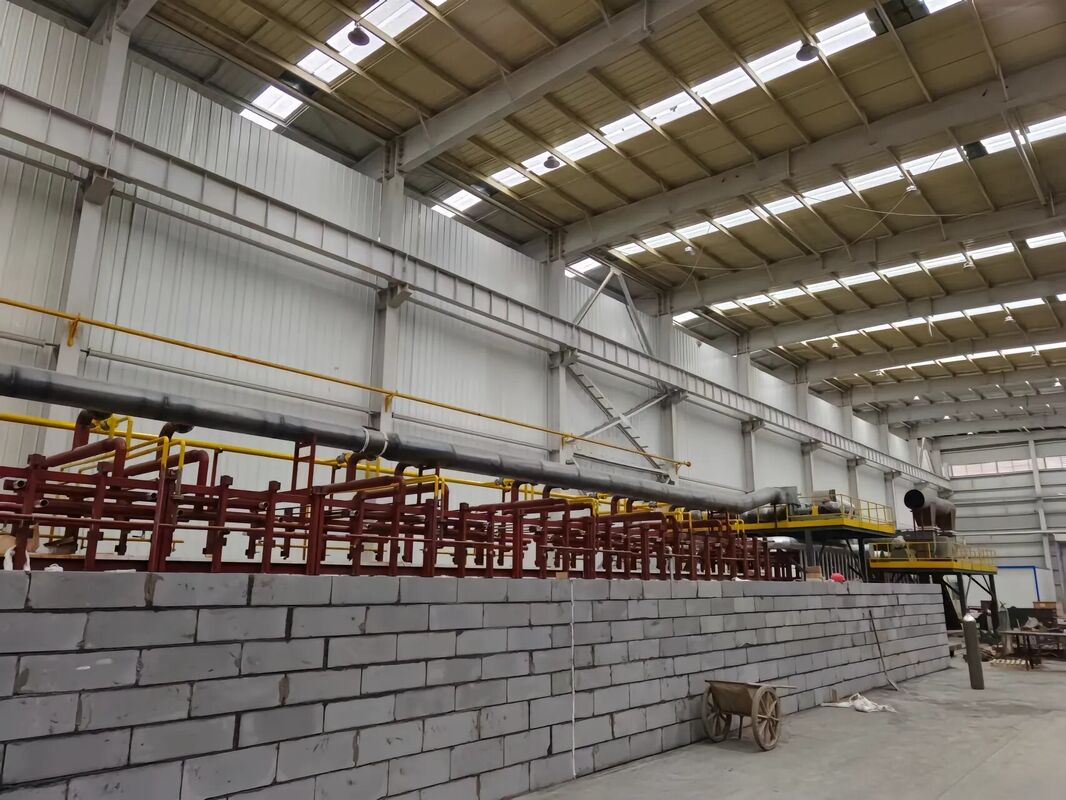
High-strength, low-water-absorption sintered red bricks produced in a tunnel kiln are widely used in modern construction projects that require excellent durability, dimensional accuracy, and long service life. Manufactured from carefully selected clay or shale and fired under precisely controlled temperatures in a continuous tunnel kiln, these bricks achieve uniform color, consistent strength, and stable physical properties. Compared with traditional firing methods, tunnel kiln technology provides better temperature distribution, improved energy efficiency, and higher production capacity. The finished bricks offer excellent compressive strength, low moisture absorption, good frost resistance, and reliable weather resistance, making them suitable for residential, commercial, industrial, and infrastructure projects. Their consistent quality also reduces construction waste and improves masonry efficiency, helping builders achieve durable and cost-effective structures.
Key Features
1. High Compressive Strength for Long-Term Structural Stability
Tunnel kiln firing enables precise control of the heating and cooling process, allowing each brick to achieve a dense internal structure and high compressive strength. These bricks can withstand heavy structural loads and maintain their integrity over many years. Their superior mechanical performance makes them ideal for load-bearing walls, foundations, industrial buildings, retaining walls, and other construction projects where long-term durability and structural safety are essential.
2. Low Water Absorption for Better Weather Resistance
The dense microstructure developed during high-temperature sintering significantly reduces water absorption. Lower moisture penetration minimizes the risk of freeze-thaw damage, salt efflorescence, and surface deterioration. As a result, these bricks perform reliably in humid, rainy, or cold environments while maintaining their appearance and structural performance. Reduced water absorption also contributes to lower maintenance costs throughout the building's service life.
3. Uniform Quality through Continuous Tunnel Kiln Firing
Continuous tunnel kiln technology provides stable firing temperatures and consistent heating throughout the production process. Every brick receives nearly identical thermal treatment, resulting in uniform dimensions, color consistency, and predictable physical properties. This manufacturing consistency simplifies construction, improves bricklaying efficiency, reduces material waste, and ensures a professional architectural appearance for both residential and commercial buildings.
4. Energy-Efficient and Large-Scale Manufacturing
Modern tunnel kilns utilize heat recovery systems and continuous production technology to maximize thermal efficiency while reducing fuel consumption. The automated process supports high-volume manufacturing with stable product quality and lower operating costs. Compared with intermittent firing methods, tunnel kiln production improves productivity, reduces emissions, and helps manufacturers achieve more sustainable and environmentally responsible brick production.
Applications
Residential Construction
High-strength sintered red bricks are widely used for villas, apartments, residential communities, and low-rise buildings. Their excellent load-bearing capacity, attractive appearance, and low maintenance requirements make them a preferred building material for long-lasting residential structures. They also provide good thermal mass, helping improve indoor comfort and energy efficiency.
Commercial and Public Buildings
Office buildings, schools, hospitals, shopping centers, hotels, and government facilities frequently use tunnel kiln-fired bricks because of their durability, fire resistance, and architectural consistency. Their uniform dimensions allow faster construction while providing reliable structural performance and an attractive exterior finish suitable for modern commercial projects.
Industrial Facilities
Factories, warehouses, workshops, and logistics centers require building materials capable of withstanding heavy loads and demanding operating environments. High-strength red bricks offer excellent durability, impact resistance, and long service life, making them suitable for industrial walls, storage buildings, utility structures, and production facilities.
Infrastructure and Landscaping
Tunnel kiln-fired red bricks are also used for boundary walls, retaining walls, pedestrian walkways, parks, landscape architecture, municipal engineering, and public infrastructure. Their weather resistance, dimensional stability, and attractive natural color allow them to maintain excellent performance and appearance even under long-term outdoor exposure.
FAQs
Q1. Why are tunnel kiln-fired bricks stronger than traditional fired bricks?
A: Tunnel kilns maintain stable and precisely controlled firing temperatures throughout the production process. This allows complete sintering, producing a denser internal structure, higher compressive strength, improved dimensional accuracy, and more consistent product quality.
Q2. What is considered low water absorption for sintered red bricks?
A: The acceptable water absorption value depends on local standards and project specifications. Generally, lower water absorption indicates a denser brick with better durability, improved frost resistance, and longer service life, especially in harsh environmental conditions.
Q3. Can these bricks be used for load-bearing structures?
A: Yes. High-strength tunnel kiln-fired red bricks are commonly used for load-bearing walls, foundations, industrial buildings, and other structural applications, provided they meet the compressive strength requirements specified by the relevant building standards.
Q4. What fuels can be used in a tunnel kiln for firing red bricks?
A: Modern tunnel kilns can operate with various energy sources, including natural gas, coal, LPG, biomass, producer gas, and other fuels. The optimal fuel selection depends on local energy availability, production capacity, operating costs, and environmental regulations.


 Your message must be between 20-3,000 characters!